Monday Font Brings Handcrafted Charm to Product Labels and Shop Branding
The candle wax had just set in the jars, and I was sitting at my kitchen table with a fresh sheet of kraft paper label stock, ready to test a new look. I had been tweaking my product packaging for weeks, trying to find a typeface that felt warm without being fussy, friendly without looking childish. That is when I opened Monday for the first time. The moment I typed a simple scent name onto the label template, I knew I had found exactly what my shop needed. There is something about the way this handwritten script font curves and connects that feels like real ink meeting real paper. It does not try to be perfect. It tries to be lovely, and it succeeds.
A Handwritten Script Font with Genuine Personality
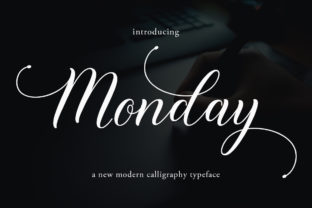
Monday belongs to the Script Amp category of Fonts, and it brings a classy yet approachable energy to any design project. The letters have a natural, flowing rhythm that reminds me of a skilled calligrapher working quickly with a fine pen. There is a slight bounce in the baseline, a gentle irregularity that keeps the text from feeling stiff or mechanical. This is the kind of handwritten font that makes people stop and look twice. It has charm, yes, but also a refined quality that lifts a product label or a greeting card into something special. When I placed Monday on my candle labels, the difference was immediate. The same jars that had looked ordinary the week before now appeared thoughtful and artisanal.
Bringing Monday to Life on Candle Labels and Product Packaging
I started with what I knew best: small-batch soy candles. The scent names were short and simple—Vanilla Bean, Cedar Smoke, Lavender Honey—and Monday handled each one beautifully. The letters stayed readable at the small scale of a four-ounce jar label, and the open, airy feel of the typeface kept the text from crowding the edges. For a display font, it has surprising clarity. I tested it on matte white labels, clear adhesive stock, and even textured recycled paper. The results were consistent across all three. The details held. The ligatures connected naturally. The overall impression was one of care and intention, exactly what I want my customers to feel when they pick up a product from my shop.
Beyond candle labels, I started incorporating Monday into boutique packaging tags for small fabric goods. A simple thank you tag with the words “Handmade with care” set in Monday became a favorite addition. Customers mentioned it in reviews, not by name, but by the feeling it gave them. That is the power of a well-chosen script font. It speaks without shouting.
Greeting Cards, Wedding Invitations, and Printable Wall Art
Monday truly shines in stationery and paper goods. I used it for a set of birthday greeting cards, pairing short celebratory phrases with delicate floral borders. The handwritten quality of the font made each card feel personal, as if I had written the message by hand for each recipient. For wedding invitations, Monday brings an elegant, romantic tone that works beautifully for couple names, event dates, and reception details. It is legible enough for the main text yet decorative enough to serve as a focal point on the invitation suite.
Printable wall art is another area where Monday excels. I created a simple farmhouse-style print with the phrase “Gather here with grateful hearts” and listed it in my shop. The combination of the warm script and a clean layout drew immediate attention. The font’s natural spacing and flow made the design process straightforward. I hardly needed to adjust kerning or letter placement. Monday did the work for me.
Practical Readability for Cutting Machines and Small-Scale Printing
If you use a Cricut or Silhouette for your handmade products, you already know that not every handwritten font survives the transfer to physical materials. Some scripts are so thin or tightly spaced that the cutting blade struggles to separate the letters cleanly. Monday performs well in this regard. The strokes have enough weight to hold their shape when cut from vinyl, HTV, or adhesive foil. I tested it on a set of small tote bag designs, cutting the phrase “Shop Small” in a warm cream vinyl. The letters weeded easily, and the final transfer was smooth. No broken connections, no frustrating re-cuts.
For printed stickers and labels, the same reliability applies. Monday works at sizes as small as one inch wide for short words, though I recommend keeping longer phrases above half an inch in height for best readability. The font includes standard ligatures and alternate characters that add variety to repeated letters, which is especially useful for monogram-style designs or repeated words on a product line.
Font Pairing Ideas for a Cohesive Brand Identity
Monday is a premium font that pairs well with several other typeface categories. Because it has a friendly, handcrafted feel, I like to balance it with a clean sans serif font for product descriptions, ingredient lists, or pricing information. A simple geometric sans serif keeps the overall design grounded and easy to read. For a more traditional look, a serif font with moderate contrast works nicely alongside Monday, especially on wedding stationery or formal packaging. The contrast between the flowing script and the structured serif creates visual interest without competing for attention.
If you prefer a layered, textured look, consider pairing Monday with a second handwritten font that has a different weight or angle. Just keep one font dominant and use the second sparingly, perhaps for accent words or a single line. I have also seen Monday used effectively with a bold display font for shop signage or social media graphics, where the contrast creates a strong focal hierarchy. The key is to let Monday lead the design. It has enough personality to carry a layout on its own.
Licensing Considerations for Commercial Use
Before you start selling products made with Monday, take a moment to review the licensing terms provided by Script Amp. Most commercial fonts in this category require a standard license for physical product sales, such as candles, shirts, mugs, or printed stationery. If you plan to create digital templates, printables, or editable design files for customers, you may need an extended license that covers template redistribution. The same applies to SVG-style cut files and digital products where the font itself is embedded or shared. Understanding your license upfront protects your shop and your creative work. It also ensures that you can keep using Monday for years without interruption.
File Formats and Multilingual Support
Monday comes in standard file formats that work across major design software, including Adobe Illustrator, Photoshop, Procreate, Canva, and Affinity Designer. If you design primarily on an iPad or in a browser-based tool, check that your platform supports OpenType features such as ligatures and alternates. These extras give Monday its distinctive character, and enabling them opens up the full range of the typeface. The font also includes multilingual support for common Western European languages, which is helpful if your shop ships internationally or if you create products for a diverse customer base.
Seasonal Products and Holiday Craft Designs
One of the reasons I return to Monday again and again is its versatility across seasons. For autumn, I used it on tag labels for pumpkin spice candles and fall-themed gift wrap. For winter, the same font brought warmth to holiday gift tags, Christmas card inserts, and a small run of wooden signs painted with “Joy to the World.” In spring, Monday appeared on seed packet printables and botanical wall art. The font’s friendly style adapts to the mood of each season without feeling forced. It does not belong to one aesthetic. It belongs to the maker who uses it well.
For small shop owners and product makers, finding a creative font that works across multiple product lines saves time and money. You can build a consistent brand identity without redesigning your packaging every season. Monday has become the anchor typeface in my shop’s visual identity. It appears on labels, tags, signage, social media graphics, and even my shop banner. Customers recognize the look even if they do not know the font name. That kind of brand recognition is valuable for any growing business.
Practical Advice for Testing Monday in Your Own Shop
If you are considering Monday for your handmade products, start with a simple project. Type a product name or a short phrase into your design software, set it in Monday, and print it on the label stock you already use. Test it at different sizes. Try it on a mockup of a product listing image. See how it looks next to your logo or your current brand identity elements. The goal is not to force the font into your existing designs, but to let it show you what your products could become. Sometimes a single change in modern typography is enough to refresh an entire product line.
Monday has earned a permanent place in my design toolkit. It is the font I reach for when I want a product to feel handcrafted, intentional, and welcoming. Whether I am designing a candle label, a wedding invitation, a tote bag graphic, or a set of printable wall art, Monday delivers the same consistent charm. It does not try to be trendy. It simply looks good, and that is exactly what a handmade seller needs from a script font.